13 July 2026
By Fiona Bridger, Senior Researcher and Writer
Living with disability means becoming very good at adapting. You learn to talk to your body, improvise when it doesn't follow a plan and laugh at times that can make most people tremble with concern. But here’s one thing I’ve found out: whenever I move, my life moves with me. When I stop, everything slowly gets harder.
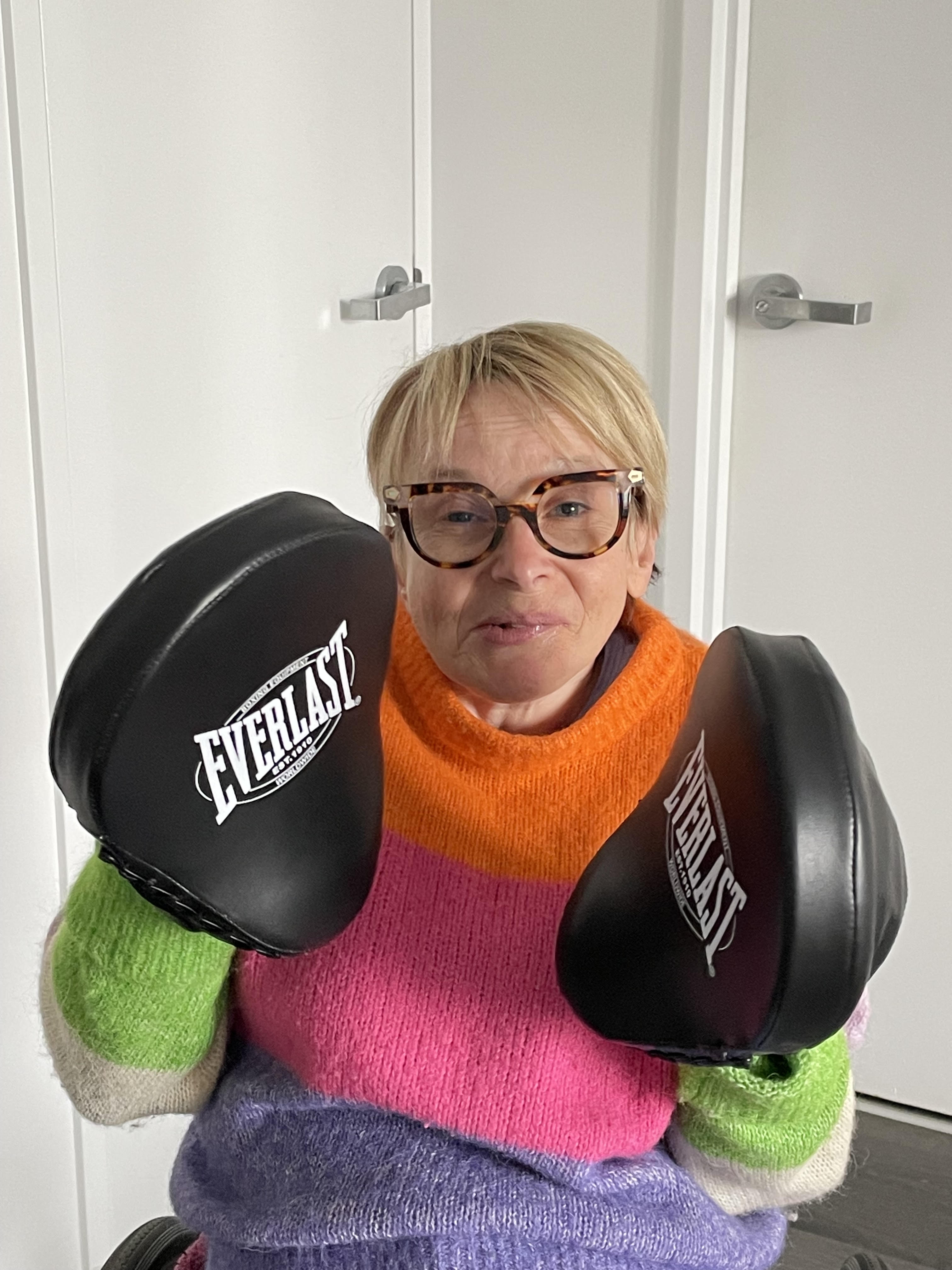
I have cerebral palsy, that is, my muscles like to have me guessing. Some days they’re cooperative. Other days they act as though they’ve had three coffees and a bad night’s sleep. So, exercise has always been such a massive part of my life. Not the “gym selfies and protein shakes” variety. The “keep me functioning, keep me independent, keep me smiling” variety.
Recently, my funding for physical therapy (personal training) and occupational therapy was cut back. When supports change, it changes how I structure my week, my goals and even my long‑term well‑being. I don’t take exercise as a choice. It’s the shift from having to sit up on my own to depending entirely on someone else. It’s the difference between shuffling around on my bed or sliding off like a confused seal. It’s the difference between walking a little or not walking at all.
My triceps are not just muscles. They’re my brakes, my steering wheel and my safety system. My abs aren’t for show. They’re what get me up from the crumpling to my feet, not to collapse onto a support worker like a sack of potatoes. These things matter. They matter every single day. But exercise isn’t simply physical. It’s social. It’s community. It’s joy.
The best example of this in my life is the City2Surf. Every year, I set myself a goal to walk 2 kilometres. Two hard‑earned, persevering kilometres. To get there, I trained with a team of awesome trainers that ultimately came closer to family. We exchanged sweat, laughter, frustration, breakthroughs and the kind of inside jokes that only occur when you’ve spent hours with someone convincing their body to help you.
When crossing that finish line, it wasn’t about the distance. It was about making my dreams come true and raising awareness of issues that matter to me, showing myself that I could achieve something bigger than myself. And that's what movement provides for people with disability.
Sure, it is strength and mobility. But it also gives purpose. It gives connection. It provokes laughter and gives us clear thinking about our own feelings: it can even help us support pride. It gives community. That is where organisations like Achieve Australia can make so much difference. Achieve supports people to access physical therapies, exercise programs and mobility-focused activities that support independence and wellbeing.
. They know movement is not a luxury. That’s just the basis for living a balanced, connected life. Their teams don’t merely help people get active. They enable people to be involved, develop, hope and remain engaged in their communities.
There are many people like me who use exercise not only to be strong but to be active. People who enjoy adaptive sports, group classes, gym classes, walking groups even a few minutes of stretching. For many people, these activities may seem small or ordinary, but they prove that exercise can take many forms and that every movement contributes to overall health and wellbeing.
So yes, my funding was cut. And that means that I have to adapt. But it does not change my view on the power of movement. It doesn’t alter the way exercise has formed my life. And it certainly doesn’t change the fact that every stretch, shuffle, wobble, step counts for something. Because exercise doesn’t have to be about muscles.
The gym gives me purpose and helps me work towards goals that matter in my everyday life: transferring safely, getting out of bed by myself, walking Heartbreak Hill and walking 2 kilometres.
Beyond the physical benefits of the gym, regular exercise can have significant positive impact on mental wellbeing. Exercising regularly has played an important role in improving my mood, increasing resilience and enhancing overall quality of life. The gym provides social connection and community engagement, providing an outlet for managing stress and anxiety. My body needs to keep moving. If it does not, things can get harder and I can lose independence that I have worked damn hard to gain.
It’s about dreams. It’s about community. It’s about health; it’s about belonging. And it’s about repeatedly proving that our bodies can do more than people expect.