
24 May 2026
By Fiona Bridger, Senior Researcher and Writer
Fashion likes to pretend it is easy. You see models floating down runways in outfits that cost more than a weekend in Byron Bay, influencers who somehow never spill coffee on themselves, and clothing ads where everyone looks like they woke up glowing. But for many people with disability, getting dressed is less “effortless chic” and more a strategic operation involving flexibility, problem-solving, and occasionally a wrestling match with a jacket sleeve.
That doesn’t mean style disappears. If anything, disability creates a more personal and inventive relationship with fashion. You learn to understand your body differently. You learn to value comfort without losing your sense of self. And you quickly realise fashion should work with your life, not expect your life to work around fashion.
For many disabled people, clothing comes with challenges mainstream fashion rarely acknowledges. Some people cannot lift their arms high enough to get into fitted tops. Fabrics pull across the shoulders, especially for wheelchair users spending long hours sitting down. Jeans bunch, dig, and fold in places jeans were never designed to fold. The “sitting test” becomes the real test of whether pants deserve to exist at all.
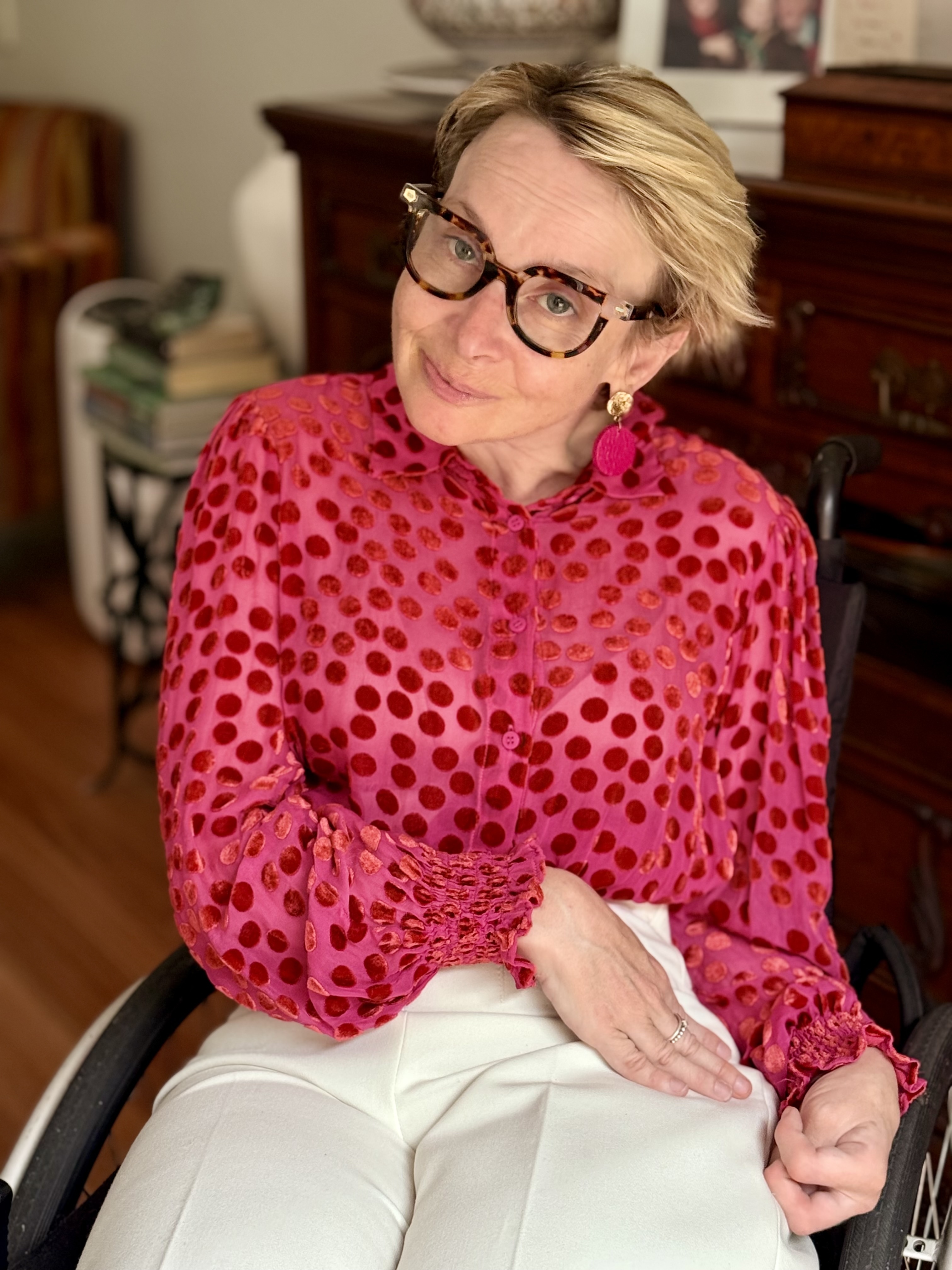
And then there’s me.
I adore fashion. I adore shopping. Buying a new piece of clothing is genuinely one of my favourite things in the world. Fashion is how I express my personality. Even the smell of brand-new clothes makes me happy. But fashion also loves to test me.
I’m a size 6, which sounds cute until you are standing in a change room trying to find something that fits. Clothes are either too long, too wide, or designed for someone built like a Dutch supermodel. Jackets look incredible on the hanger, but once I put them on, they become stylish restraint devices. Sleeves swallow my arms whole. And because I’m petite, courtesy of cerebral palsy, every pair of pants needs hemming.
Shoes are honestly one of my personal villain origin stories. My feet need wide, supportive, enclosed shoes. If they are not wide enough, my body lets me know immediately. My feet spasm, my toes revolt, and suddenly I am fighting for my life in the middle of a shoe shop while tiny strappy heels stare at me from the shelf like forbidden fruit.
Shopping itself can feel like an Olympic sport. Change rooms are often too small to fit both a support worker and me. Aisles are narrow. Doors are heavy. Clothing racks are placed at heights only reachable by professional basketball players. Accessible bathrooms are either locked, occupied, or mysteriously full of boxes.
Getting changed also takes much longer when you have a disability. Trying on multiple outfits can feel like cardio. By the third outfit, you are exhausted, tangled in fabric, and questioning every life decision that brought you into the shopping centre in the first place.
But despite all of that, I still love fashion deeply. Fashion is more than clothing. It is identity, creativity, humour, and confidence stitched together in fabric. Even my gadgets match my outfits because style genuinely brings me joy.
This is why mixing and matching clothes is not about blindly following trends. It is about building a wardrobe that works with your body, mobility, energy levels, and everyday life. The best outfit is the one you can live your life in comfortably.
Soft cottons, stretchy fabrics, elastic waistbands, and relaxed fits can make an enormous difference. Once you have comfortable staples, styling becomes easier because you are no longer distracted by discomfort. Texture can instantly elevate an outfit, a soft knit with denim, linen with cotton, or a leather-look bag paired with relaxed fabrics.
Layers are another lifesaver. Lightweight jackets, oversized shirts, scarves, and cardigans add personality without restricting movement. And speaking of scarves, one of my favourite fashion hacks is using them as a stylish bib to protect my clothes from spills. Fashion and function are living together peacefully for once.
Adaptive fashion is finally becoming more visible and thank goodness for that. Magnetic buttons, side openings, and sensory-friendly seams can turn an exhausting dressing experience into something manageable. Most importantly, adaptive fashion no longer must look medical. Brands are finally realising disabled people want to look good too.
For many disabled people, fashion becomes less about perfection and more about storytelling. What you wear can communicate humour, confidence, creativity, or joy. It can say, “I’m here,” even on days when your body feels heavy.
Disabled style is some of the most thoughtful and creative fashion out there. We adapt. We problem-solve. We mix practicality with personality in ways the fashion industry is still catching up to.
Because fashion should never be about shrinking yourself to fit in. Sometimes, it is about taking up space exactly as you are.