
25 May 2026
By Tayla Appleby, Marketing and Communications Coordinator
If you’re thinking about becoming a Disability Support Worker, understanding what the role looks like can make all the difference. I spoke with one of Achieve’s experienced Senior Support Workers to understand what it’s really like to provide person-centred support.
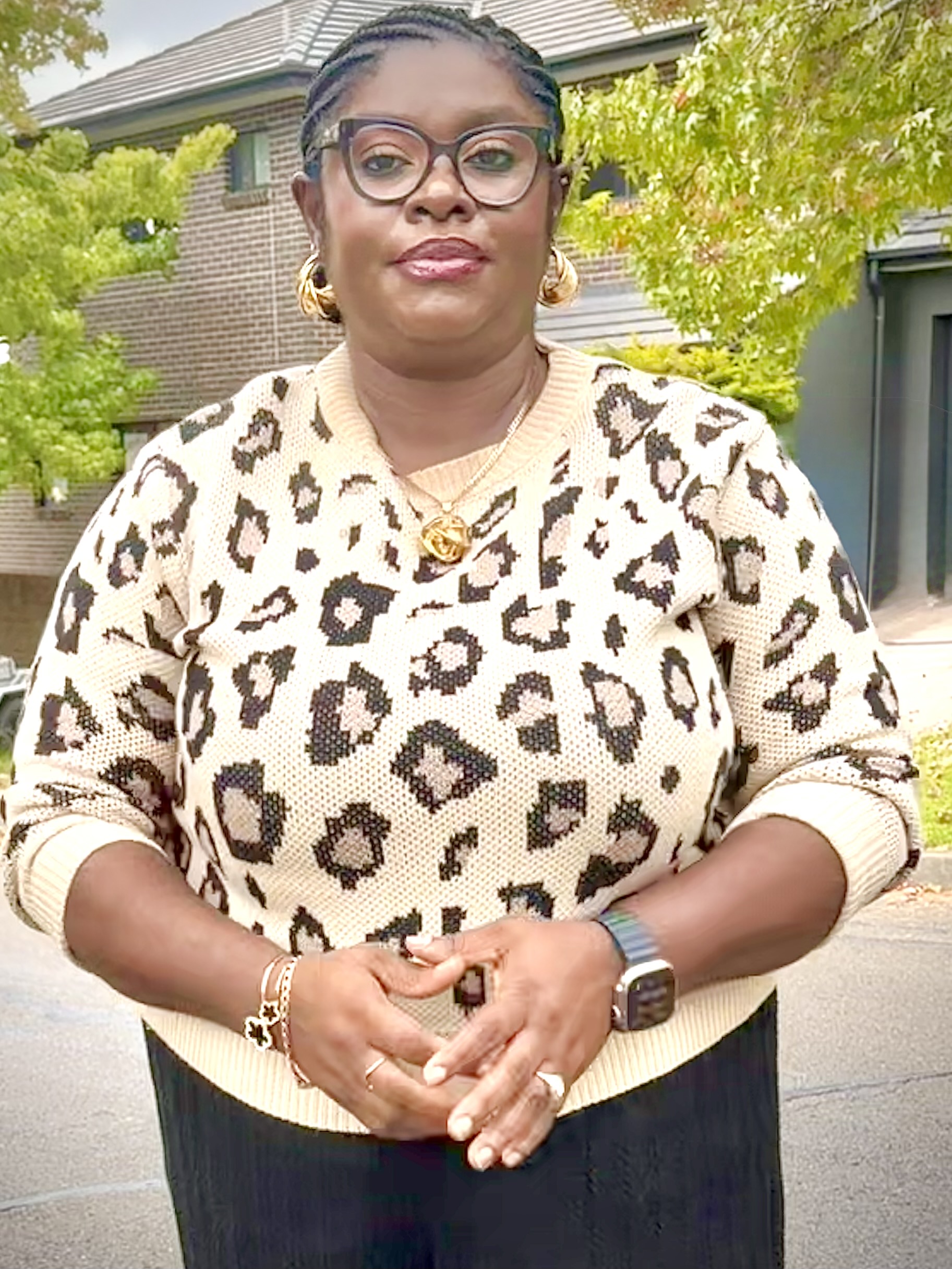
Support workers are the heart and soul of Achieve, and I recently had the privilege of interviewing Amarachi Ifeme, a Senior Support Worker who started with us in August 2021.
When asked what she found most rewarding about the job, Amarachi said “that some people’s lives are dependent on yours, as little as you are, another person’s life and wellbeing is reliant on you, it’s a thing to be very humble about knowing the little things you do go a long way to put a smile on someone’s face.”
This is what it’s all about and why we do what we do here at Achieve.
She also mentioned “it’s not always about being right, but rather how we get there.” For her, “respect and person-centred support” is crucial. You need to understand the people you support and your team, have emotional intelligence and empathy.
As the interview progressed, I wanted to get to know more about her and her role as Senior Support Worker.
What does a typical day look like for you?
An average day is “working with the people we support and also supporting/coaching our staff within the Supported Independent Living (SIL) home, coming in, taking handover from the previous shift and finding out whether there’s been any changes, behaviour of concern or anything that happened in that shift", she says.
It’s also important to “cross-check and find out what we have on for the next day, whether there are other appointments or Community Participation, or whatever the duty is for the day.”
Amarachi then “maps it out and gets everyone on board”, ensuring the team knows what role they need to play. For her, “As a senior support worker you're supporting both client and staff, but the most important thing is that you’re working as a team to achieve person centred care where people are being supported on their own terms, in order for them to develop new skills whilst achieving their daily goals.”
This includes supporting people with personal care, meal preparation, grooming, as well as other tasks they need to do. After all, it is the persons home and we need to give choice and control to the those we support, enabling them “to become the better version of themselves, it’s about encouragement”, she said.
There’s also an element of management, ensuring “the documentations or any behavioural concerns or issues are escalated”, sometimes there may be the need to “liaise with the GP or other personnels like behavioural professionals, speech therapists”, Community Participation plans and “checking out risk assessment to make sure that client safety is paramount.” It’s also paramount to have proper documentation of all events of the day and a handover for the next shift.
How much variety is there from one day to the next?
There really is no one day that is the same. It’s important to come with an open mind. Every day is a new day. Ask the people you support, “What’s your plan for today? What are you excited about? What do you want to engage with? What kind of activity do you want to participate in?”
The people we support call the shots. For Amarachi, “every behaviour is someone trying to communicate.” It’s also important when you’re dealing with a variety of people, “some people are non-verbal, or have very limited communication skills.” So, you need to understand their behaviour support and care plans. She also says “you have to be open minded and read between the lines”, because what something meant yesterday to someone may not mean the same thing today. There may be a variety of different behaviours, but it’s essential that we consider everyone involved and are very familiar with the client's behaviour support plan or interventions.
Are there moments during the day that require you to think on your feet?
You think on your feet a lot. We know “when you’re dealing with persons with disability, it might be difficult sometimes to communicate needs, so you have to ask yourself what you should do as a support person to be able to support them effectively”, she says.
“How do you provide the right choices and options for them, if they decide to make a risky choice, how do I support them with that choice?” Ensuring they are relatively safe while still “getting the fulfillment they want in their lives.” You may have a lot of appointments, paperwork or plans to review, all the while managing staff and the people we support. It’s about managing different behaviours and being a quick thinker, while “your actions are still very clear and respectful”, she says.
I also saw the value in understanding the people we support and how this blends with the role of Senior Support Worker.
How do you balance practical support while building meaningful relationships with the people we support?
For Amarachi, it’s understanding that the person she is supporting is in charge. Secondly, whatever support you provide has to have the person at the centre.
“You are there as a support person in their own home, we’re thinking about respect, dignity, and providing a safe space”, she says. They need to be “safe enough to be able to communicate anything to you.”
How do you get to know the people you support and what matters to them?
Amarachi sees her job as a calling, “it’s beyond just coming to work. You’re coming in to know that someone's life is dependent on what you say, what you do, how you’re able to respond to issues - you’re managing somebody’s life.”
She says “you’re supporting someone to become a better version of themselves. You’re there improving on staff’s strengths to make them more confident in the job they’re providing for the people we support.”
For her, if she’s able to address this, that’s a great day. For Amarachi to walk in and see the person she supports smiling and rocking because she’s excited, it means she has made some form of positive impact on her life.
At the end of the day, this is what it’s all about. We are there to support the person, ensuring they’re seen, heard and happy.
Can you give me an example of a small moment that made a big difference to someone?
Amarachi supports a person who is non-verbal, and in today’s world we know quieter people tend to be overlooked. Amarachi has supported her to the level where in the mornings, she is now able to pick up the clothes she wants to wear, this was achieved by consistently getting her to participate through showing her options. “For her to be able to make certain choices for herself, that’s amazing”, says Amarachi.
“Sometimes, she will come with her walker and sit between the staff having discussions during handover, she does this because she feels acknowledged.”
She may be non-verbal, but she understands their communication just fine.
To conclude, I wanted to know her best advice for someone considering a career in support work.
“It’s all about you empowering others, on their own terms, not on your terms. You come in to enable clients, not to disable them. Enabling is getting them involved in their day-to-day life. You’re there to build those skills.”
She also says, “a senior support worker role is coaching, it is mentoring, showcasing leadership by example - it is hands on, being there and being present.”
One sentence stood out to me; she said you can ask yourself “what memories have you left behind? Memories come by the impact you have created in the lives of people.”
I’ve never heard a truer word spoken.