1 August 2026
By Fiona Bridger, Senior Researcher and Writer
Most of these challenges are preventable, yet people with disabilities still meet hurdles that hinder their full involvement in society. The greatest misconception in the world is that disability is the problem.
Disability is disabling when community overlooks the needs of every individual. When buildings are inaccessible, when potential employers pass over good prospects, when people make judgments about what someone capable or incapable of doing can do, the barricade isn’t the disability, it’s society.
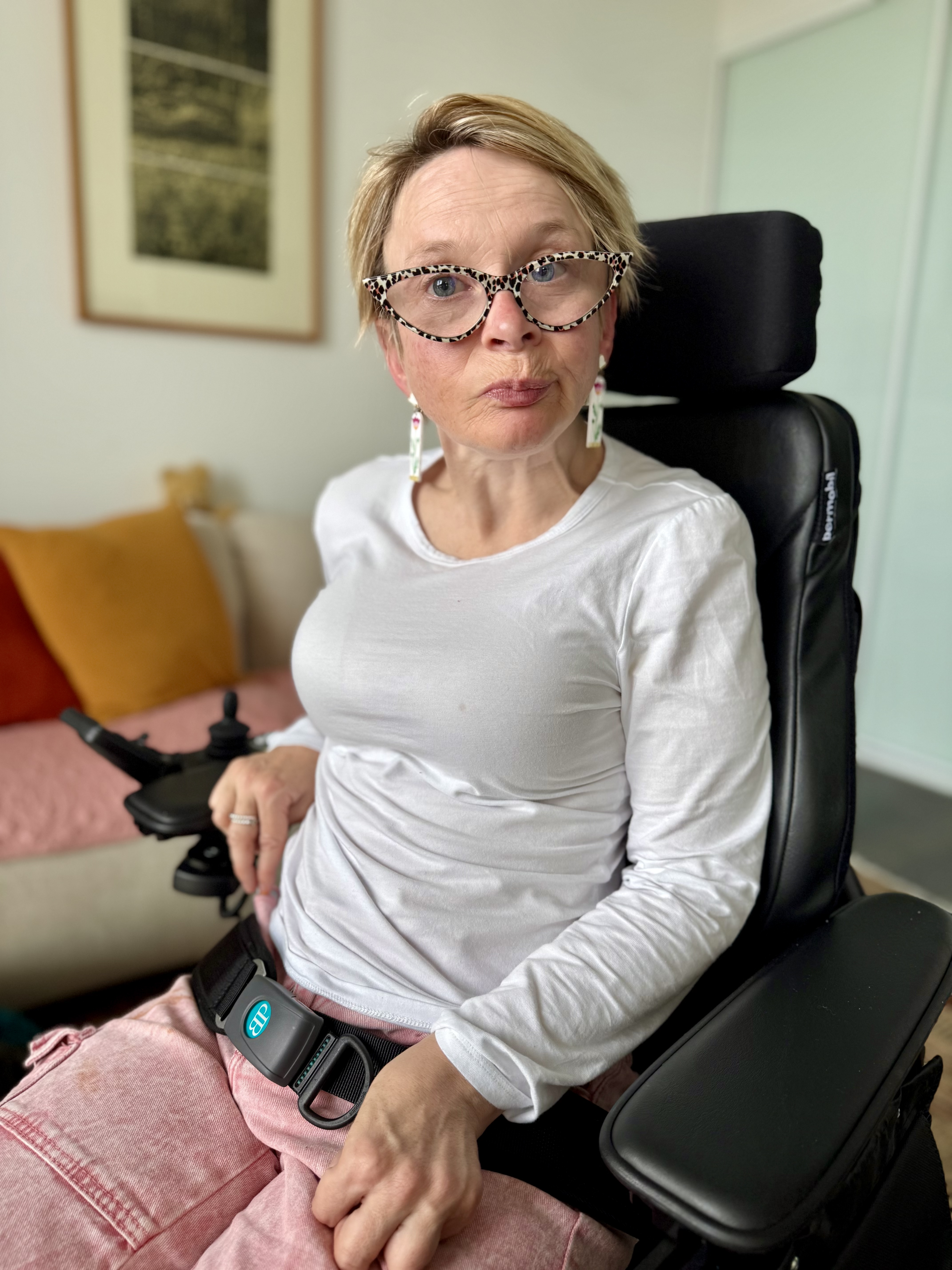
A world that is genuinely inclusive is built on an understanding that accessibility and inclusion serve all not just those with disabilities. I know this because I have experienced it. Growing up with cerebral palsy, I have experienced a plethora of barriers during my entire life. One of the largest is job offers. Like many graduates, I assumed that once I graduated from university finding employment would be easy.
After all, I had worked extremely hard, graduating from three universities. I hoped my abilities, resolve and passion could tell the story. I was wrong. Over a year, I'd applied for over 150 jobs. Despite my qualifications: one after another I found myself turned away. Frustrating, occasionally heart-wrenching. But, I couldn’t help wondering whether employers were seeing my disability before they saw my capabilities.
Determined to do something about it, I opened up on the ABC’s Q&A some years ago explaining to staff members what barrier individuals with disabilities face when attempting to enter the workforce. From there, I moved on to an opportunity where I was invited to become a guest lecturer at UTS, speaking to Speech Pathology students in their final year about Augmentative and Alternative Communication (AAC) and the importance of communication access.
A few years after that, I had been hired as a researcher and writer at Achieve Australia. Today I get the great privilege of using my daily lived experience, and the advocacy techniques I’ve gained to tell stories that can help to dispel stereotypes and promote understanding. Reflection: When I look back though, I see that my career wasn’t the route I thought, but it led me exactly where I knew how to be.
Employment is only one of the barriers people with disabilities still face. As a result, attitudes are often the largest barriers to overcome. They are invisible. Many people still assume that people with disabilities are incapable, dependent, or unfit for society's contributions. Sometimes these attitudes are very subtle, as for example talking to my support person instead of speaking to me. Sometimes they are obvious, like thinking that I can’t hold a job, have relationships, travel or make my own choices.
Such misconceptions stem from ableism, defined as the belief — often unconscious — that people without disabilities are automatically superior or more worthy than those with disabilities. Challenging ableism begins with education and representation, and people with disabilities telling their stories. In one of my recent videos, I described the myth that people with disabilities can’t achieve anything. Society has a tendency to underestimate our abilities before we can show what we can do. The reality is that every day of the year, people with disabilities go to work, study, travel, raise families, start businesses, fall in love and give back to their communities. We do not require lower standards. We need equal opportunities.
Communication is another area where people with disabilities still face barriers. Today’s digital world leaves millions out, people have websites that are inaccessible, videos without captions, things not able to be read as a screen reader, and information offered in a single format. Accessibility is not only a technical requirement; it is a human right. When information is inaccessible, we see people being shut out from education, employment, healthcare, and community life.
Economic barriers also have a large effect. People with disabilities frequently have greater day-to-day living costs and higher levels of unemployment and underemployment. Most employers still think that workplace adjustments are expensive or difficult, when in fact they’re simple, affordable and most of the time they help everyone. To create inclusive workplaces isn’t just the right thing to do; it is good business. Another challenge is achieving social inclusion. Far too frequently there are community-based festivals, sporting activities, arts programs, or social events not specifically designed with accessibility in mind.
When people with disabilities are left out of these opportunities and experiences it can have an impact not only on their opportunities, but their belonging. Media portrayal is just as critical. When disabled people are missing from TV, commercials, leadership roles and public conversations, society sees disability as a freakish thing to avoid, rather than the norm of human diversity. Education is also very important and its role is also quite significant. Each child has the right to an education that values their abilities and supports their development.
Inclusive education is not simply about putting students with disabilities in regular classrooms. It is about making sure pedagogy, materials and school culture enable all students to reach their full potential. The good news is these barriers are not inevitable. They are determined by structures, mindsets, environments; they can also be transformed.
Real inclusion starts by asking people with disabilities to fit into a world that wasn’t built for them, and by designing a world that works for everyone. It is listening to people who have lived them, questions the assumptions that have not changed, and understanding that disability, it’s just a natural one in human diversity.
Each ramp, website, workplace and conversation that breaks free from stereotypes brings us one step closer to a society that everyone is welcome. The reality is simple; we build a better society for all when we take down barriers for people with disabilities.