
26 March 2026
If people speak about you more than to you, the message is obvious: they haven’t learned to see you.
For Emma Bennison, CEO of Disability Advocacy Network Australia (DANA), this experience is all too familiar. She reflects on this in one of her TED Talks, describing the frustration of being addressed through a companion rather than directly, a quiet but persistent reminder of how society tends to overlook people with disabilities.
When asked what must change in everyday culture, Emma isn’t hesitant. Visibility, she says, is the beginning. “We all have to be more visible,” she explains. “And obviously we don’t control that visibility very much, which is part of why it doesn’t change, or why we don’t get changes as fast as we want.” For Emma, visibility isn’t tokenism. It is about being present in spaces where people with disabilities have been largely excluded, from leadership and media to public life. When disabled people are seen contributing across all sectors, assumptions start to shift. “We’re not just objects of charity,” she says. “We do have something to contribute.”
She uses a familiar case, airports, to illustrate this. Staff helping her often assume she must be travelling for leisure. The notion that she might be travelling for work, let alone as a CEO, rarely crosses their minds. It reflects a broader issue. Disabled people still too often stay invisible as professionals and decision-makers. This is why disability leadership is so important to her. It is not the full remedy, but it is a strong catalyst. “The more people with disabilities we get in visible leadership roles, not only within the disability community but beyond it, the more things will change.”
Emma’s own leadership reflects that belief. As an experienced CEO, Chair, executive and Non-Executive Director, she brings curiosity, creativity, and strategic thinking to complex challenges across the not-for-profit, corporate, and government sectors. Emma is deeply committed to developing the next generation of leaders, mentoring and supporting people to grow without losing themselves. She leads with calm confidence and authenticity, fostering inclusive cultures where diversity is recognised as a strength, and people are empowered to do meaningful work. A lifelong learner, she continues to evolve, always focused on how individuals and organisations can do better.
Her career has taken her across Australia regularly, and she jokes that she practically lives in airports. But the travel is part of something larger, a career defined not by personal accolades, but by systemic change. When asked what achievement she is most proud of, she pauses. “I can’t point to a single achievement,” she says. Instead, she highlights moments where her work has improved systems for others, including securing audio description on public broadcasters, advocating for arts funding for disabled artists, and creating employment pathways for people with disabilities.
One initiative stands out, founding the United Blind Leaders. “It’s bittersweet,” she admits. “I wish we didn’t have to do it.” The group appeared from frustration that blindness organisations were not prioritising blind leadership. Their advocacy led Vision Australia to undertake an external recruitment process for its CEO, something they had not initially planned. A supporting petition gathered more than 1,400 signatures. “I’m proud of that because I want the next generation not to have to fight these battles,” she says. “If I achieve nothing else, that will be enough for me.”
Her philosophy of inclusion is grounded in practicality. Inclusion is not simply about being in the room. “It’s about having a seat at the table and being genuinely part of the decision-making process.” True inclusion should be seamless. It should not require constant negotiation or emotional labour from disabled people. “Systems have thought about you by default,” she explains.
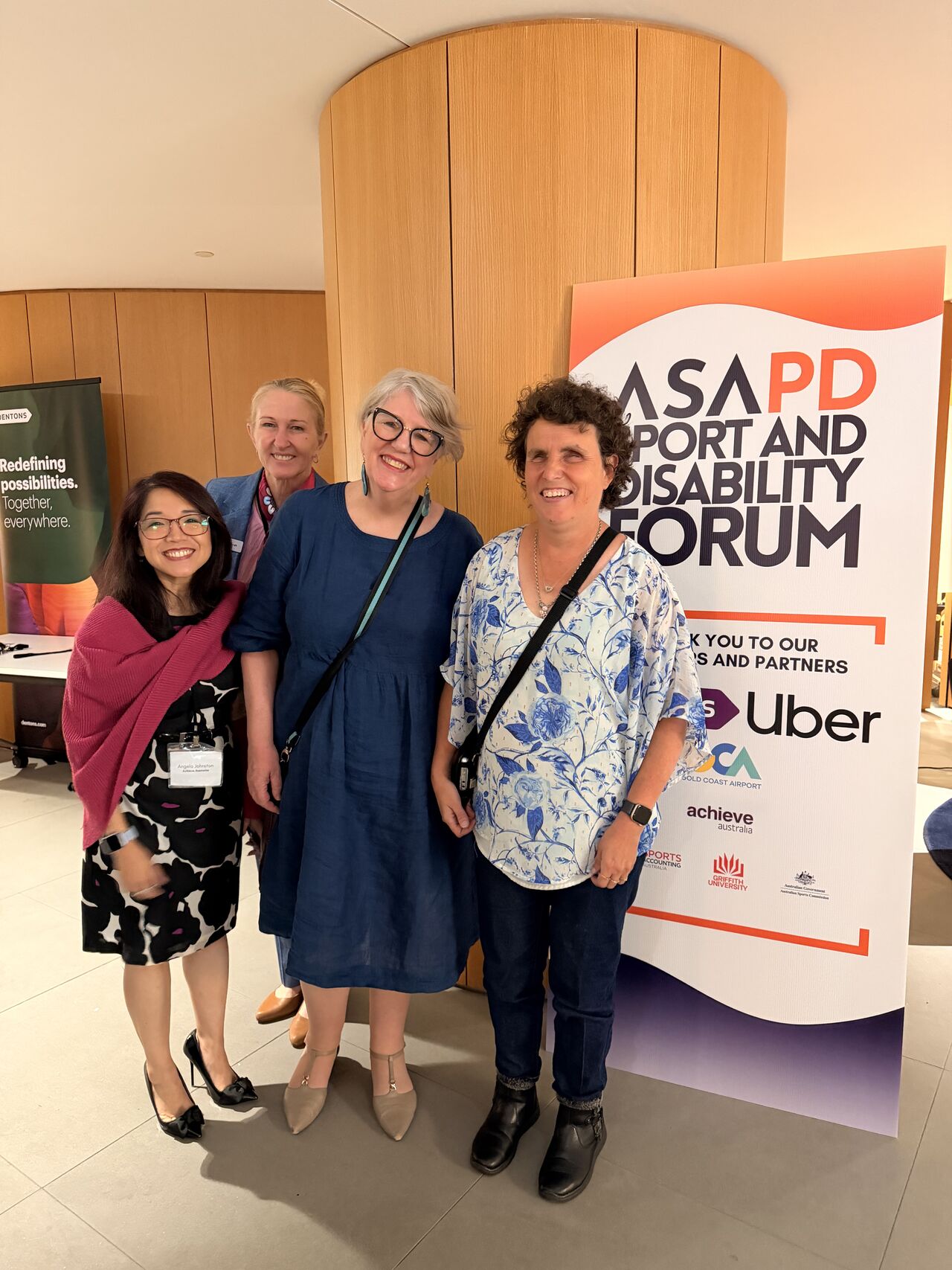
This thinking shapes her approach to leadership and her excitement about speaking at the Australian Sporting Alliance for People with Disability Conference. She laughs at the irony. “I’m really not very sporty at all,” she says, admitting she initially wondered if the organisers had made a mistake. They hadn’t. They were seeking insight into inclusive leadership that could extend beyond sport. She is looking forward to learning as much as sharing. “I’m excited to come at this from a different perspective and hear others’ perspectives too. I’ll probably learn a lot.”
Is she hopeful that events like this will lead to real change? Absolutely. “I’m always hopeful. I’m an eternal optimist. Otherwise, I wouldn’t still be in this sector.” But she is clear that optimism must be matched with action. “The real question is: what can you actually take back into your life and act on?” Her keynote focuses on practical steps, small, meaningful actions that collectively shift culture.
Emma’s journey into the disability sector began early. Growing up attending Braille music camps, she was immersed in the community from a young age. Her first professional role was with the Queensland Government in the late 1990s, and from there her path evolved into advocacy, leadership, and national influence.
As the conversation ends, one thing is clear. For Emma Bennison, visibility, leadership, and inclusion are not abstract ideas. They are daily commitments, and through her work, she is helping shape a future where disabled people are not only seen, but recognised, trusted, and empowered to lead.