

Independent Living resources for families
Practical information and real experiences to support people and their families navigate the move to Supported Independent Living.
Moving into a new home is a big step.
For some people, it means moving out of the family home for the first time. For others, it means leaving hospital or rehabilitation after a long stay and returning to life in the community.
Whatever the situation, a successful move takes more than finding the right house. It takes planning, the right supports and time to understand what will help someone feel comfortable, safe and at home.
What is Supported Independent Living?
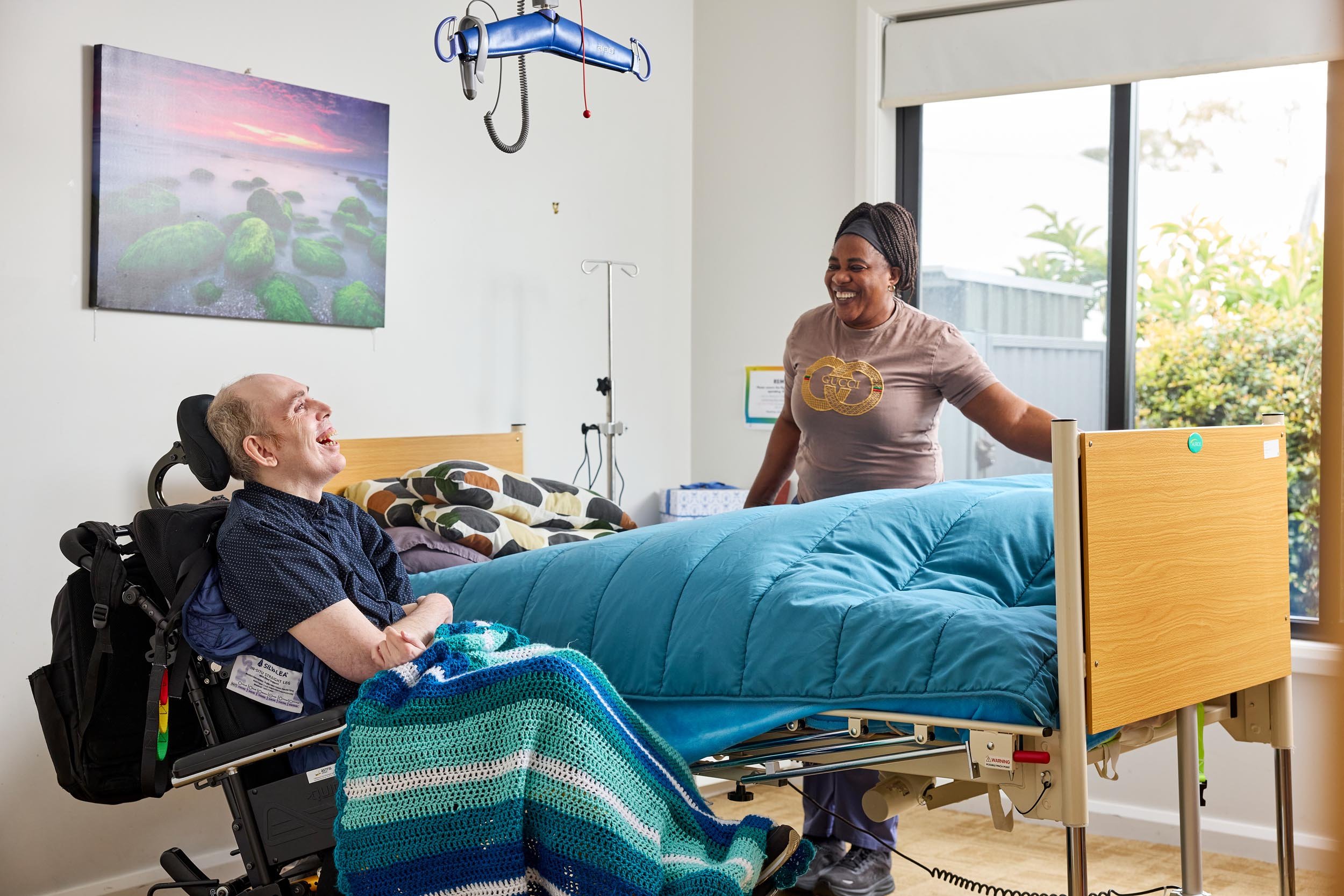
Supported Independent Living, or SIL, is for people with disability who need support with everyday tasks while living in their own home.
The support someone receives will depend on their individual needs and goals. It can include help with personal care, meals, household tasks, medication, getting out into the community and building everyday living skills.
For people with more complex needs, moving into SIL can also involve coordinating health supports, equipment, home modifications and clinical care.
The aim is for each person to live in a way that gives them as much choice, independence and connection to their community as possible.
Planning ahead
A guide to independent living pathways for people with disability.
Hear it from the people who matter
Find the right home and support
Mortdale
North Ryde
Moving home stories
Moving into Supported Independent Living can be exciting, but it can also bring uncertainty. For people leaving the family home, it can mean adjusting to greater independence, while families may be learning to step back from a long-term caring role.
For people leaving hospital or rehabilitation, the transition may involve more complex planning. Achieve Australia can work alongside hospital teams, rehabilitation services, discharge coordinators, allied health professionals and families to plan the move and support the transition into a new home.
What makes a move successful?
Planning may include:
- understanding the person's goals, routines and preferences
- finding a home that suits their accessibility and support needs
- involving family members, health professionals and other important people
- planning equipment or home modifications
- understanding medication, personal care and clinical requirements
- introducing the support team before the move
- arranging visits or overnight stays where appropriate
- reviewing how things are working after the move and making changes where needed